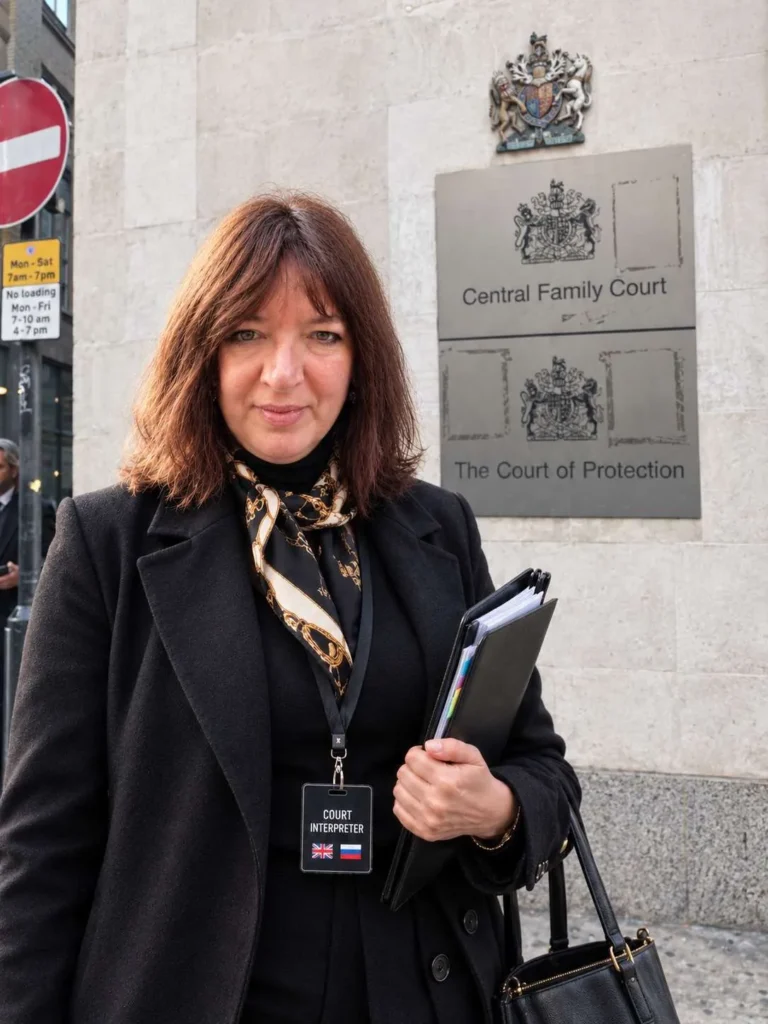
We interpret between Russian and English for family proceedings in London: in solicitors’ offices, at mediation, and at the Central Family Court at First Avenue House on High Holborn.
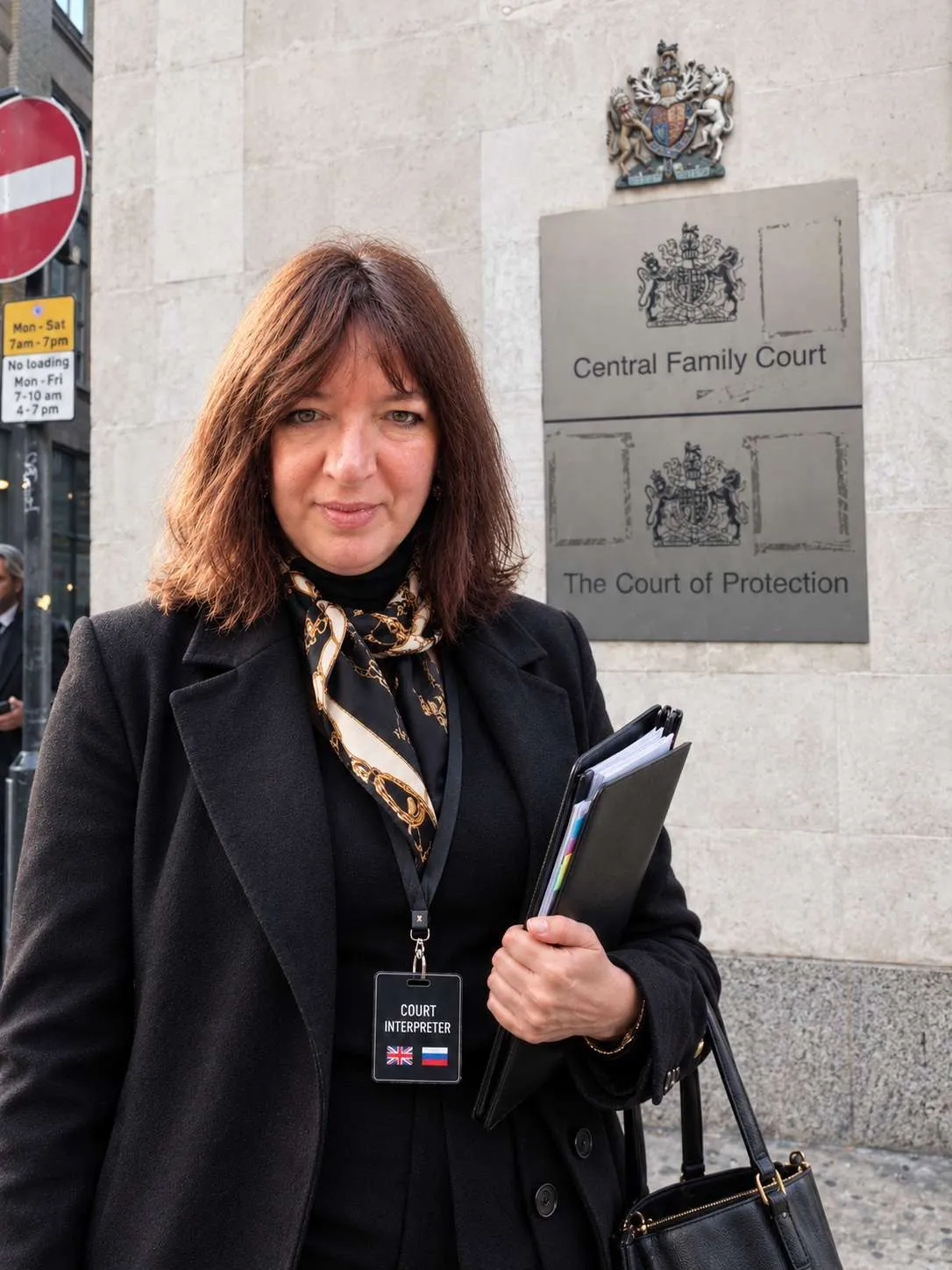
What the court pays for, and what it doesn’t
This catches almost everyone out, so it’s worth saying first.
Where a party to family proceedings needs an interpreter for the hearing, the court arranges and pays for one. You don’t book that and you don’t choose who turns up.
Everything outside the courtroom is yours to arrange. The conference with counsel, taking the client’s statement, going through disclosure, the mediation session, the MIAM, the private FDR, translating the documents for the bundle. That is where the case is actually built, and none of it is covered.
Check the current funding position with the solicitor conducting the matter, and ask about Legal Aid if the client is funded — it sometimes covers interpreter costs for solicitor meetings.
Conferences with counsel
A conference moves at the speed of the interpreting, so we prepare before it. Send the position statement, the chronology or the key correspondence and we arrive knowing the names, the dates and the terms in both languages.
We work consecutively in conference. It is slower than whispering, and far safer when a client is being asked to confirm something they will sign.
Statements and disclosure
Statement-taking is where accuracy earns its fee. The client’s words have to reach English without being tidied, because a tidied statement comes apart under cross-examination.
For financial disclosure we read bank statements, company documents and property papers with the client and interpret what they say, so the solicitor gets answers instead of a shrug.
Mediation, MIAM and private FDR
We interpret in mediation and at MIAMs, and at private FDR and family arbitration where both sides have agreed to a Russian-speaking participant.
These run long, and they need an interpreter who stays neutral when the room doesn’t. We interpret what is said, including the parts a client would prefer softened.
Cross-border cases
Relocation, child arrangements running across two countries, wrongful retention and Hague Convention matters in the High Court. The questions that decide these cases — habitual residence, who holds the right to travel, what was agreed and when — turn on precise language, often in messages written years ago in another country.
We cover the Russian and English element. Where a case also turns on a third language, that leg needs its own interpreter and we will say so rather than stretch.
Documents for the bundle
Certified translation of Russian documents for use in proceedings: marriage and divorce certificates, birth certificates, orders from other jurisdictions, financial statements, correspondence and messages.
Everything is translated complete, including stamps, handwritten notes and anything struck through. Where a document is partly illegible we mark it illegible rather than guess, because a guess in a bundle is worse than a gap.
What “certified” means here, and why there is no sworn translator in England and Wales, is set out on our sworn translator page.
Confidentiality
We sign the firm’s NDA, or our own. We do not discuss matters, we do not publish case studies, and no client’s circumstances appear on this website in any form, anonymised or otherwise. A family case is identifiable from very little.
Papers sent to us are returned or destroyed at the end of the instruction.
Instructing us
Tell us the date, the type of appointment, where it is and who will be in the room. We confirm availability the same day. Enquiries through the contact page.
We are instructed by the solicitor or by the client directly. We are not appointed by, or connected to, any court.